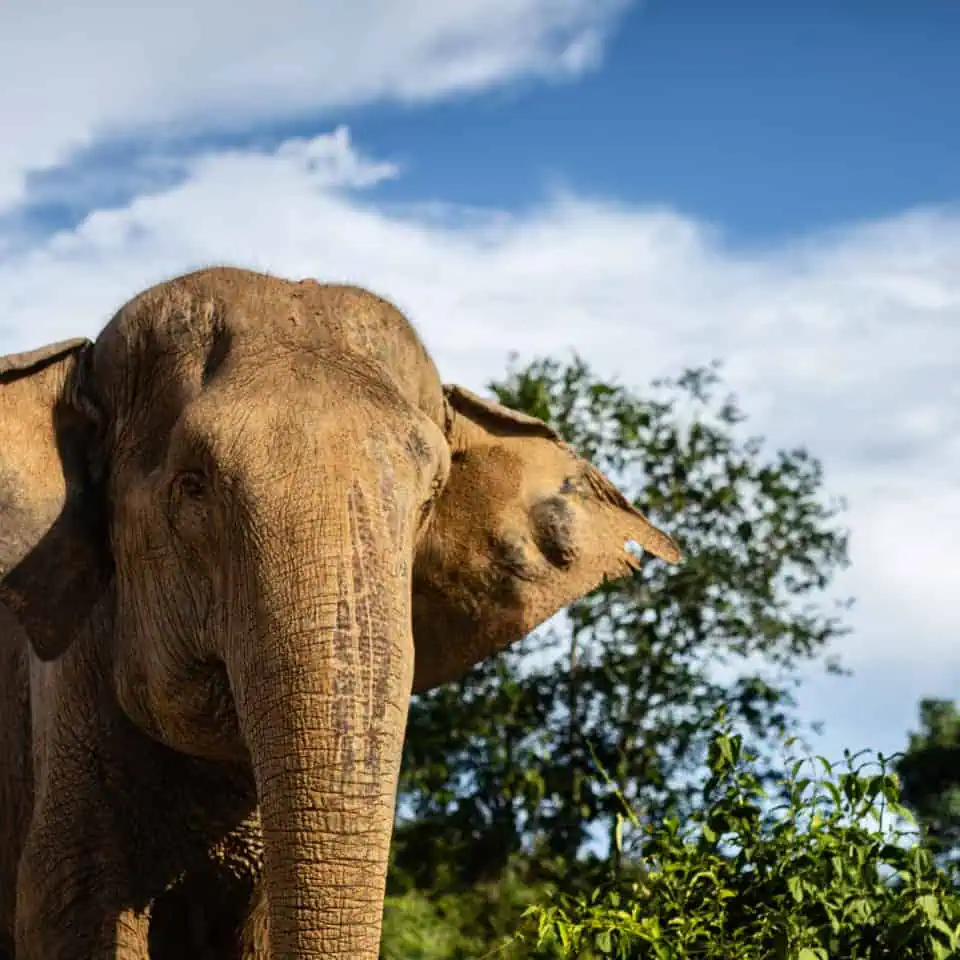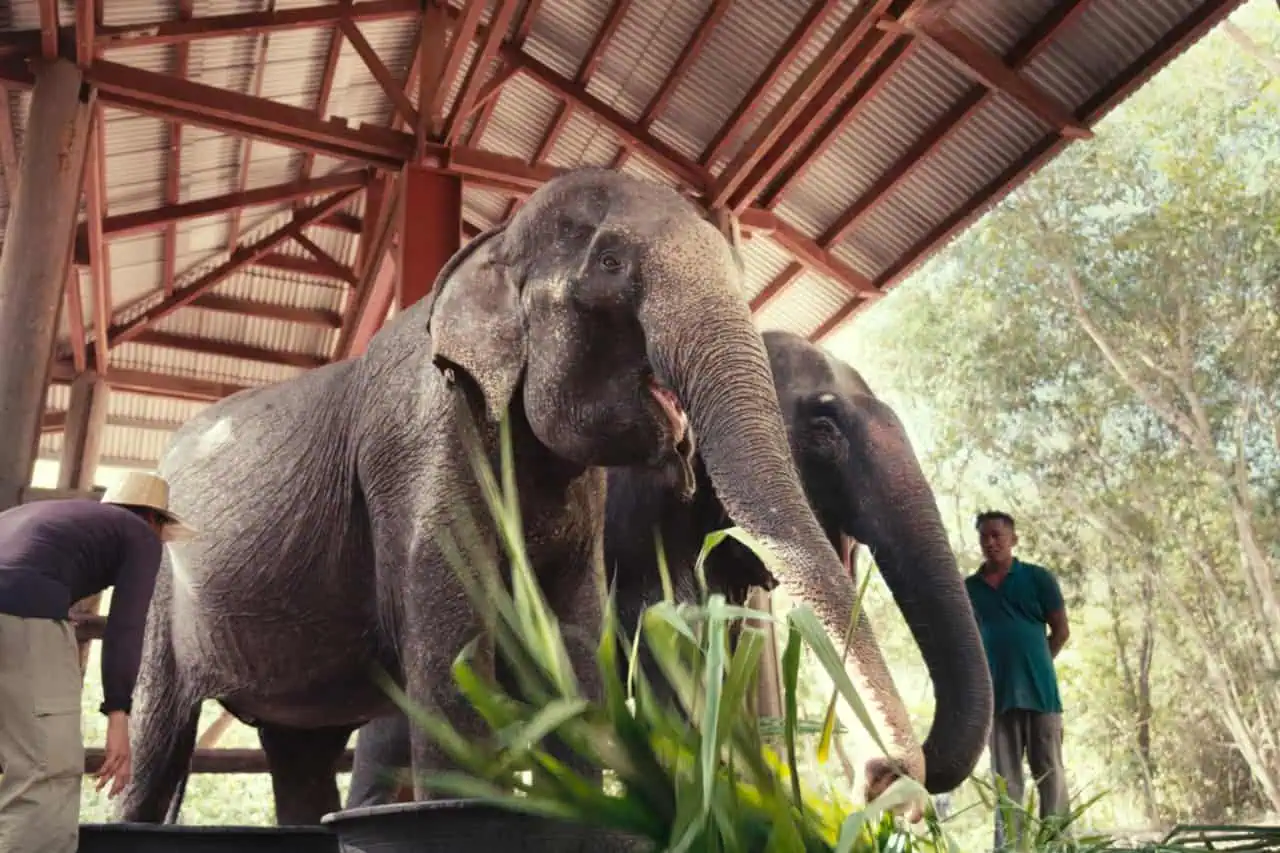
Every morning at Kulen Elephant Forest, before the mist has fully lifted from the Cambodian jungle, the elephants begin their first and most important activity of the day: eating. An adult Asian elephant can consume up to 300 kilograms of food in a single day, spending as many as 18 hours foraging, browsing, and grazing. But what makes elephant feeding behaviour truly remarkable isn’t the quantity; it’s the knowledge behind every bite.
A Diet as Complex as the Forest Itself
Asian elephants are generalist herbivores, which means they eat a staggering variety of plant material depending on the season, the landscape, and what’s available. At Kulen Elephant Forest, the elephants’ diet includes:
- Grasses and sedges: the foundation of their daily intake, especially during the wet season when fresh growth is abundant
- Bark and woody browse: stripped from trees with their tusks or trunk, providing roughage and essential minerals
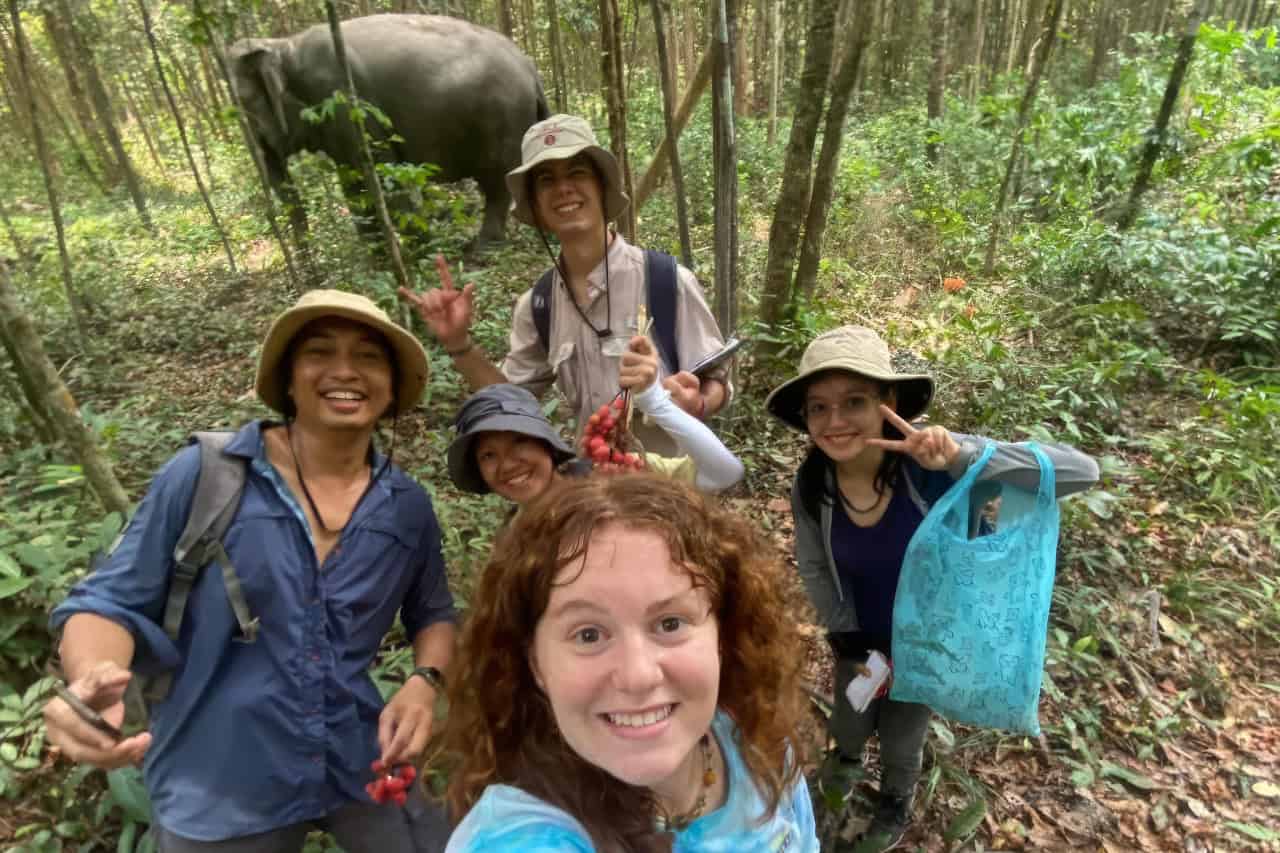
- Fruits and seeds: a welcome seasonal supplement, and one that plays a vital ecological role (elephants are among Southeast Asia’s most important seed dispersers)
- Bamboo shoots: high in water and nutrients, particularly valued during dry periods
- Mineral-rich soils and clay: actively sought out for their sodium and other trace minerals not found in sufficient quantities in plant matter alone
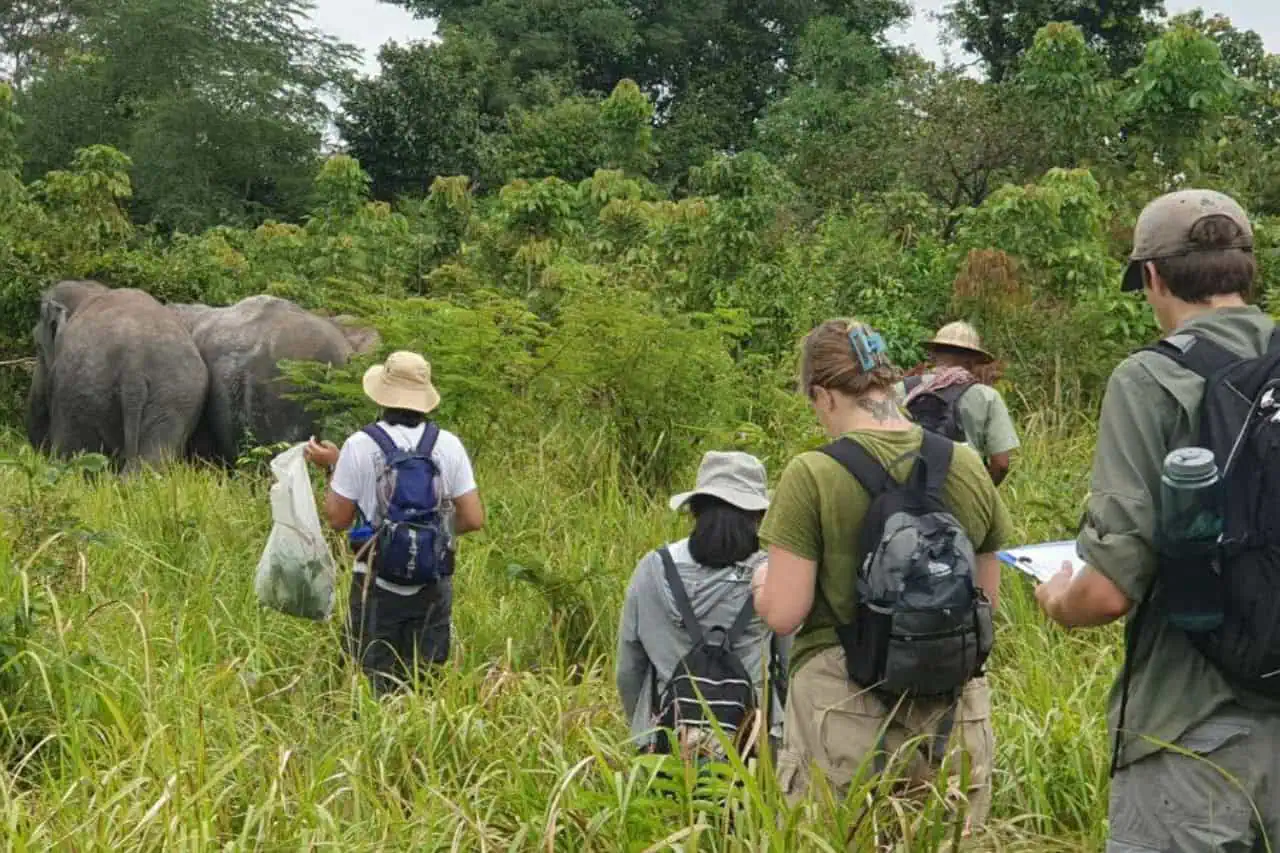
What’s striking is how selective elephants are. They don’t simply eat what’s in front of them. They make choices; avoiding certain plants, favouring specific parts of others, returning year after year to particular patches of forest. That selectivity isn’t instinct alone, it’s learned behavior transmitted by observation, marking the existence of a “culture” around food.
The Matriarch Knows Best
Elephant herds are matriarchal societies, and nowhere is the value of experienced female leadership more evident than in foraging. The oldest cow in a herd functions as a living library of ecological knowledge: she remembers where water sources are located in drought years, which plants are safe after a storm has changed the landscape, and which seasonal fruiting trees are worth a long detour.
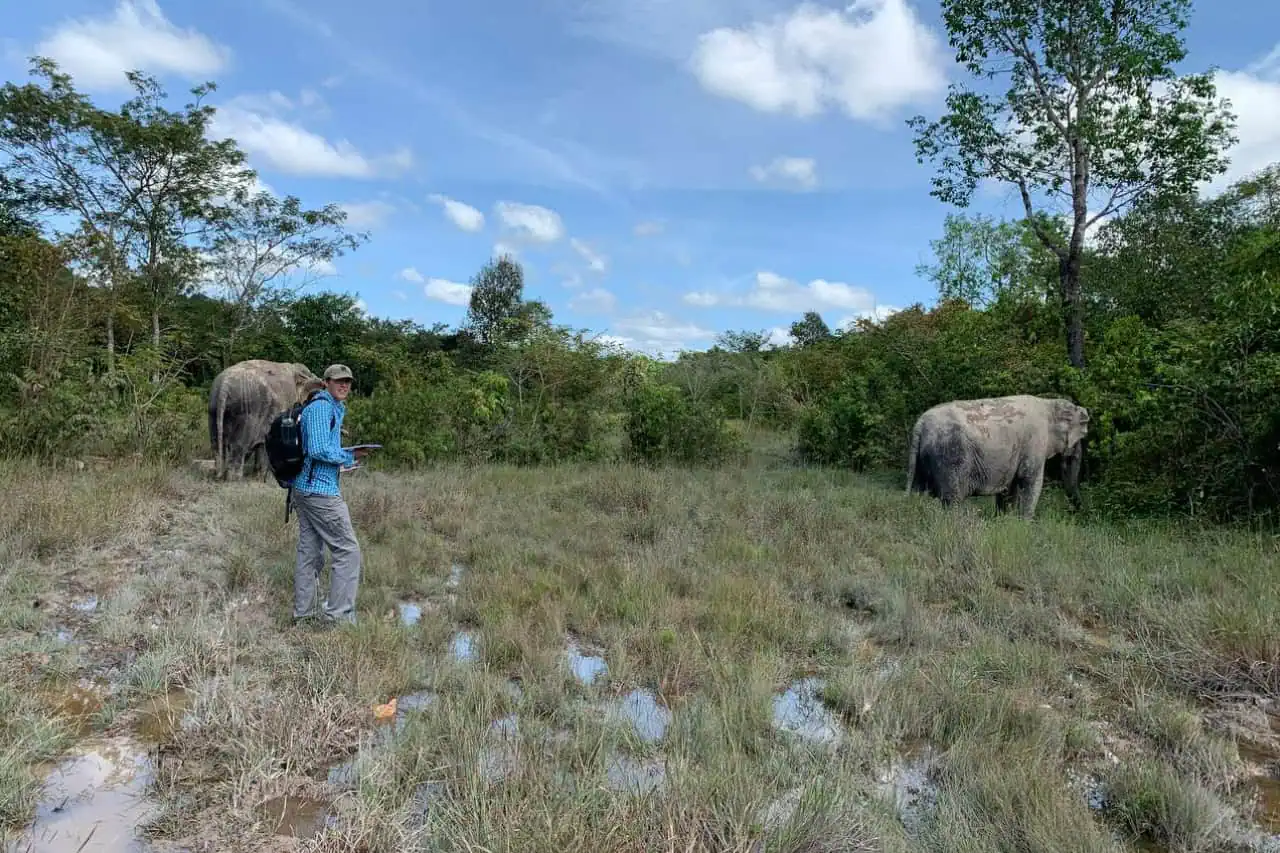
Research has shown that herds led by older matriarchs have significantly better survival outcomes during times of environmental stress. The matriarch’s dietary knowledge can be life-saving.
Young elephants learn by observation and imitation, closely watching their mothers, aunts, and elder herd members from the earliest weeks of life. A calf will often sample what its mother is eating, reaching up with a small, unsteady trunk to investigate the food in the older elephant’s mouth. Over years, this builds a detailed internal map of what’s edible, what’s nutritious, and what to avoid.
Why This Matters for Conservation
The transmission of dietary knowledge is one of the most fragile aspects of elephant culture, and one of the least discussed. When elephant populations are disrupted through poaching, habitat fragmentation, or captivity without proper social structure, these knowledge chains can break. Young elephants who grow up without experienced elders may struggle to forage effectively or may not know how to adapt to changing seasonal conditions.
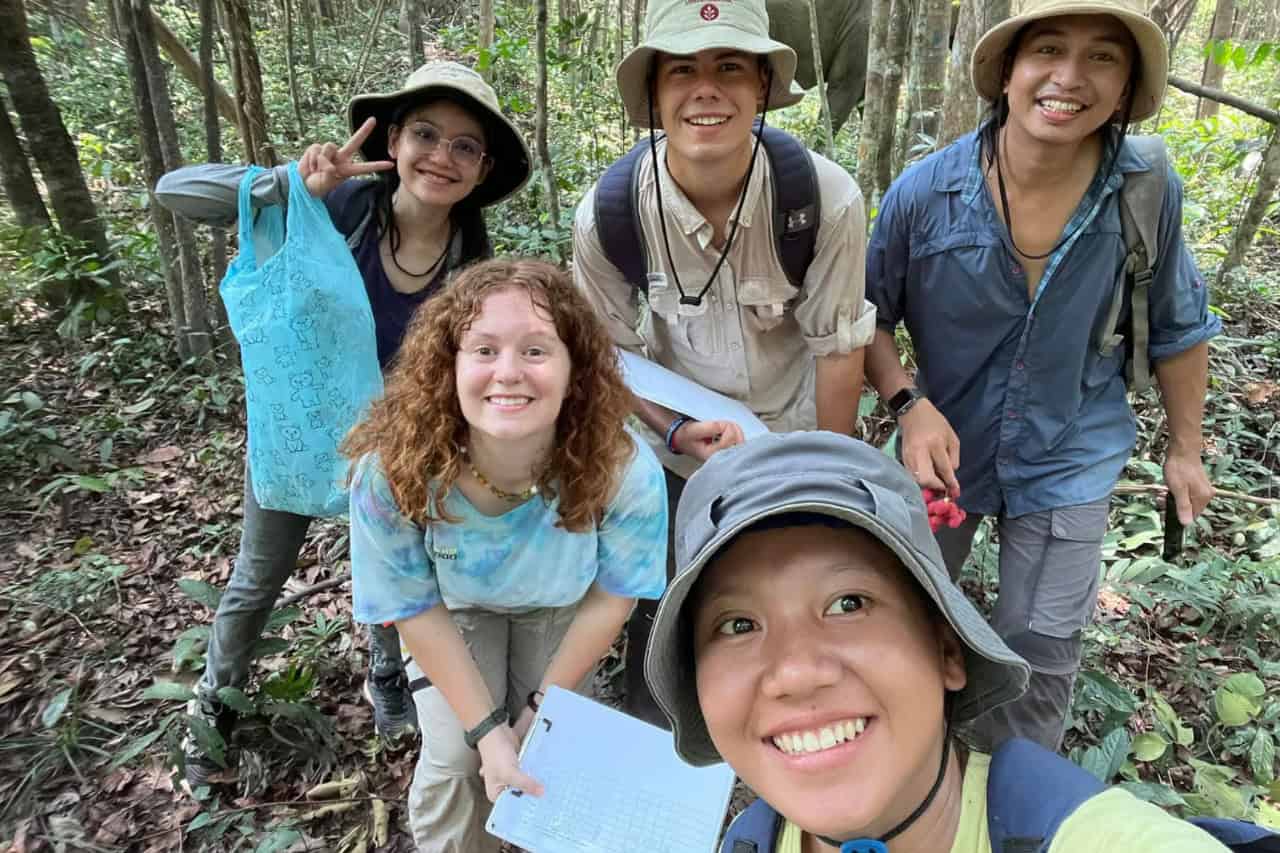
At Kulen Elephant Forest, we’re deeply mindful of this. Our approach to elephant care is guided by the understanding that elephants are not simply individual animals, they are social beings whose wellbeing is inseparable from their relationships and their cultural knowledge. Wherever possible, we support natural social groupings, allowing experienced elephants to play the mentoring roles they would occupy in the wild.
Watching It Happen
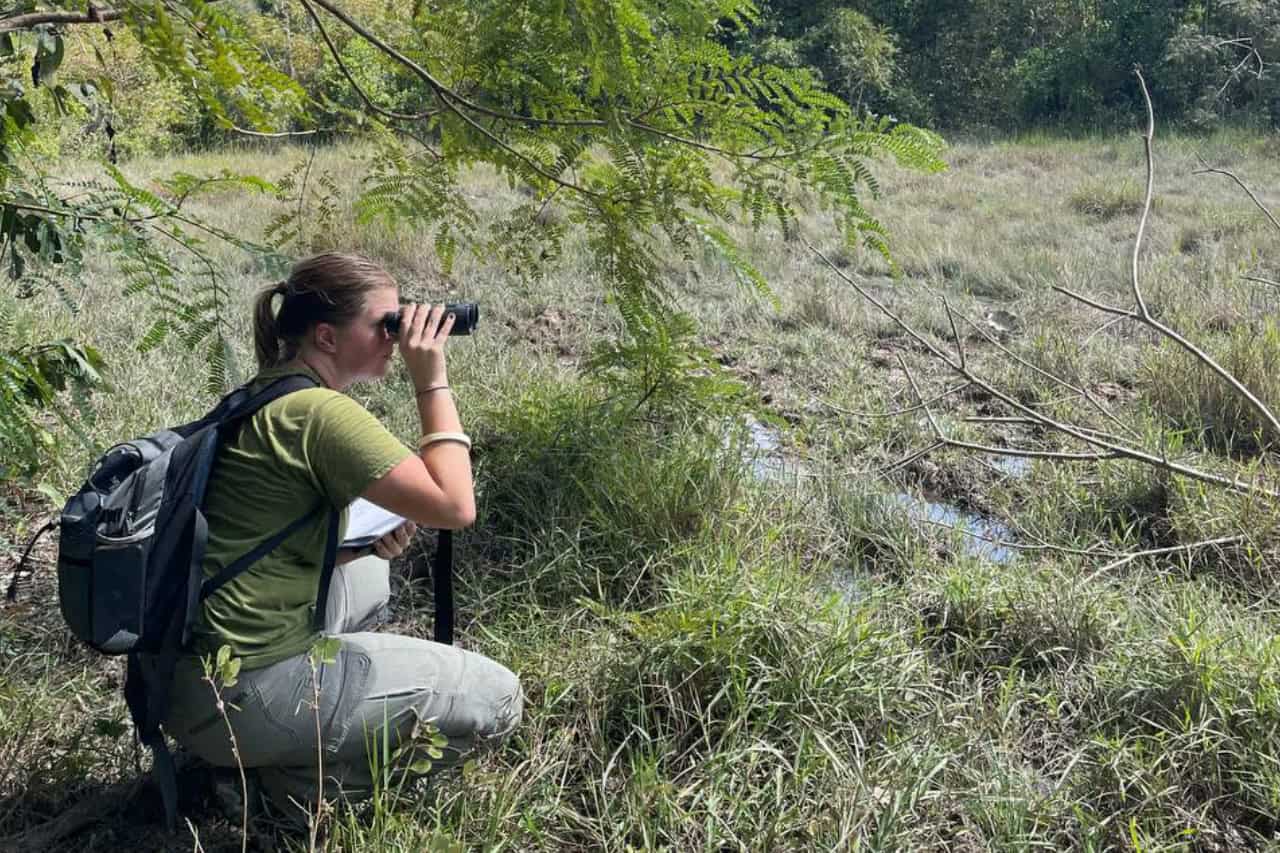
One of the quieter privileges of visiting Kulen Elephant Forest is witnessing dietary knowledge in action. You might see a younger elephant tentatively reaching toward a plant, then pulling back to watch how an older companion handles it first. You might notice how the herd spreads across a foraging area with an efficiency that looks almost coordinated: because it is.
These aren’t trained behaviours. They’re the result of years of accumulated social learning, playing out in real time in front of you.
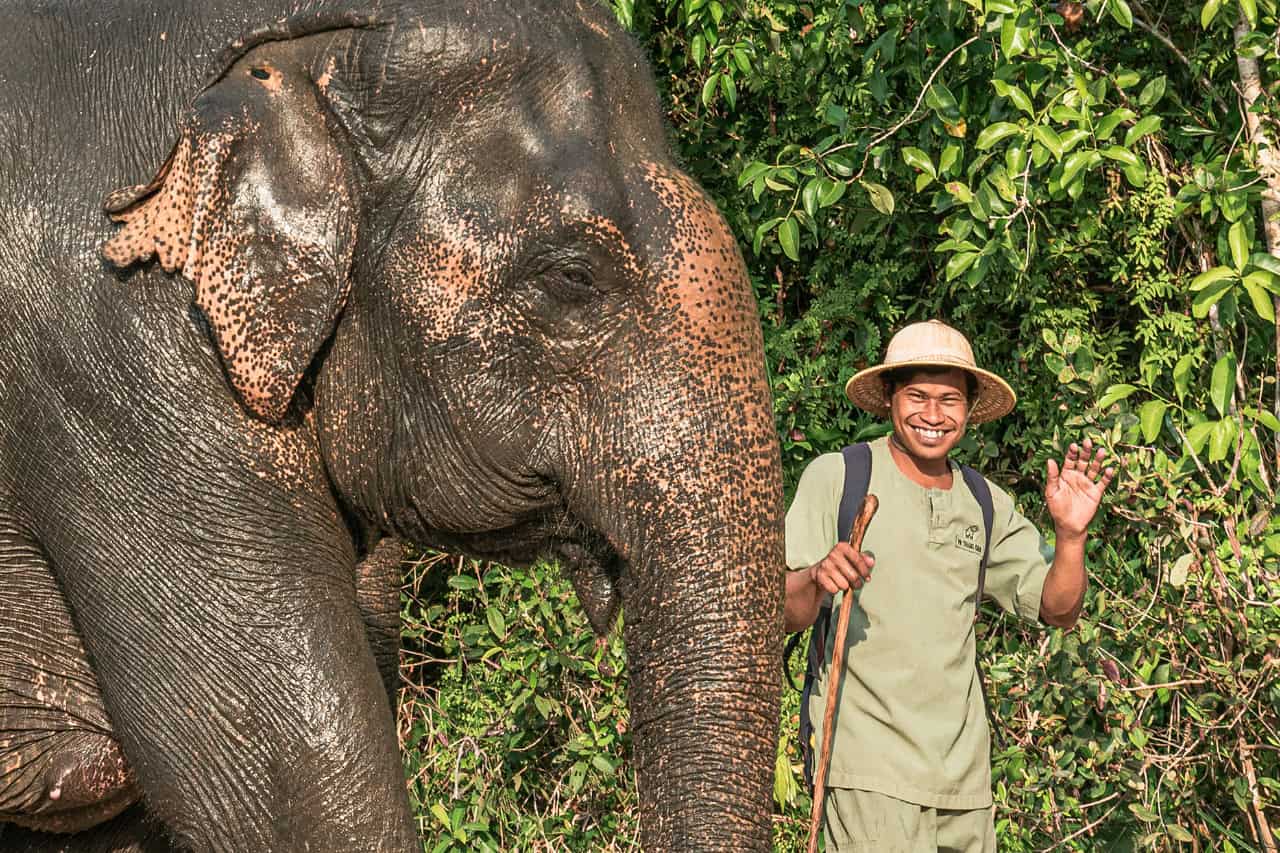
If you’d like to understand more about what you’re seeing during your visit, our mahouts and elephant care team are always happy to explain the foraging patterns of the individual elephants in their care. Each animal has a story, and their relationship with food is very much part of it.
Read more about elephant diets at Kulen Elephant Forest by clicking through to this study conducted by the School for Field Studies “Temporal and spatial variation in forage selection by semi-captive
Asian elephants Elephas maximus in lowland and highland areas of Cambodia” published in the “Cambodian Journal of Natural History”.
Kulen Elephant Forest is an ethical elephant sanctuary in Siem Reap, Cambodia, committed to the welfare, dignity, and behaviour of Asian elephants. Learn more about planning your visit our tours.